Our age is one thick with rights-talk; everyone is eager to claim their rights, but few are prepared to consider philosophically what precisely this stirring word, ‘right’, even means, what reality it signifies. We claim to believe in inalienable rights. We claim to believe in inherent human dignity. We are like, if I may reference a cartoon, Wile E. Coyote who has run off the edge of a cliff but who still keeps running until he realizes what he has done and, cartoon physics kicking in, falls to the ground to his own hurt. Why do I say this? I certainly uphold the reality of rights, inalienable and emerging from inherent human dignity. Indeed, my previous writings have asserted the transcendent dignity of all humans and their fundamental rights, and what I say in the following presumes what I have said before. In using the Coyote analogy, I mean to say that we have run with the notion of rights without giving it sufficient intellectual grounding, and, without remedying this we cannot properly develop the achievement of the Universal Declaration, but risk regressing.
There is an air of unreality about the rights discourse because it is based on insubstantial intellectual notions. We are quick to claim our rights, but we do not have an explanation, as to the fundamental elements of the concept, of why these rights should be respected in themselves and not because of extrinsic factors. Rather, the groundwork for properly asserting the dignity and rights of mankind is the essence of human nature: its structure with its inherent needs, and the consequent obligations which our being itself, as that of a social animal, gives rise to in relation to the other. In what follows, I propose that rights are consequent upon our obligations, in part the legal manifestation of our natural social obligations, inasmuch as law is an expression of our social being. Needs and obligations must have primacy in our framework of policy and law regarding human obligations, even as rights have their place. This must not merely be a semantic exercise as some have done it.[1] We need to have a real and meaningful shift in our thinking.
Now, we are all alive; we are living humans. Consequent upon the fact of our being alive, is a need to sustain that life: we need food. Indeed, the need for food, the need to sustain life is that need of our nature, at least that of our animal nature, felt most acutely. We may go unclean, unhoused, even unloved by our fellow creatures for all our long lives, but unfed, we quickly waste away and die. The first need corresponding to the very first fact of our nature is to be fed. Without it, we cannot even begin to live an animal life, let alone one which is properly human. This is a relatively simple deduction.
Very well then, you have needs, what is that to do with me? How do needs correspond to obligations? The answer to this is also derived from our nature. It is an obvious fact, that the human animal is a social creature dependent upon others sharing his nature to fulfil his needs. This is not an accident of our being, but essential to it. I think, however, that we should not pass so readily from this basic idea. Donne’s celebrated passage on no man being an island, a thing true in not only theology but in our discussion too, comes to mind and perhaps we should dwell on it a little.
“No man is an island, entire of itself;” says he, “every man is a piece of the continent, a part of the main; if a clod be washed away by the sea, Europe is the less, as well as if a promontory were, as well as if a manor of thy friend’s or of thine own were; any man’s death diminishes me, because I am involved in mankind, and therefore never send to know for whom the bell tolls; it tolls for thee.”[2]
Inherent also in our nature is our social being; we are bound to each other of necessity; we need each other. Donne considers this, as he continues his thoughts, from the angle of example. As the bell tolls for the dead man, so should one unite one’s own thoughts to him in memento mori. That is not, however, the only conclusion of his idea.[3] Because no man is a self-contained island, because no man is a sovereign, self-sufficient entity, he is dependent on his fellow man to supply the needs he lacks. And these needs are many: material, affective, intellectual and spiritual. The goods of nature, not only the external goods but the internal goods of human abilities too, are unevenly distributed making each part exist in mutual dependence on the other. Thus, I as a human exist in dependence on you as a human, and you do likewise. Our nature demands that, for our existence to flourish, to be fully actualized, we should supply the needs of the other: that is our obligation as subjects. Never mind about Hume, because the ‘ought’ is implicit in the ‘is’ of the rational human subject.
It is on this basis that interpersonal obligations exist, even where basic needs are not concerned, because, for example, human beings also have a need as part of their social being to have promises, or property right, upheld, or else the fabric of their social existence will be damaged. In later posts this idea may be developed. For now, we must concern ourselves with political justice. Defining it, Aristotle says that “political justice means justice as between free and (actually or proportionately) equal persons, living a common life for the purpose of satisfying their needs”.[4] There are two points I draw from this text. That, a polis exists when people come together on the basis of citizenship to satisfy their needs, and that when these needs are satisfied and each has his due, the purpose for which the polis exists, political justice is served. We have needs, others have obligations towards is in respect of these needs. The most fundamental reason for establishing political society is so that our needs and obligations may be more effectually satisfied.
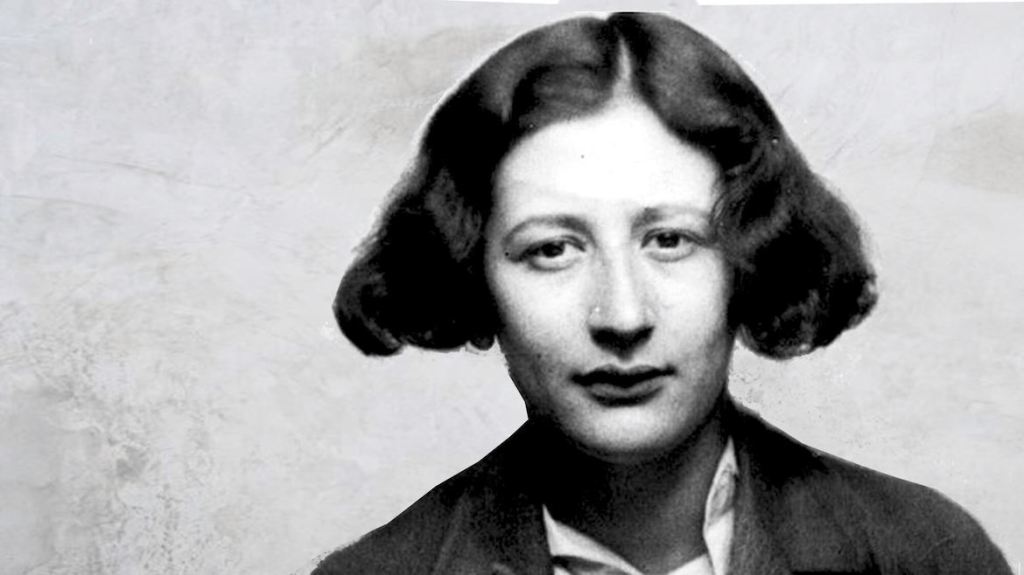
So, I think Weil is right to say that the “concept of obligations takes precedence over that of rights, which are subordinate and relative to it”.[5] Indeed, a “right is not effective on its own, but solely in relation to the obligation to which it corresponds”.[6] A right is the entitlement I have to your obligation being fulfilled. It is what I get out of your obligation. It has a moral dimension inasmuch as obligations are themselves moral. It has a political dimension, in so far as we consider that relations in the polis fundamentally require the proper satisfaction of needs and obligations, as a matter of political justice and therefore the continuance of the polis itself. In this sense, rights may also be given a narrower legal dimension. So, whereas the internal structuring and system of law of the polity and the personal relations of its people should be such that needs and obligations be perfectly executed, there are instances when the governing authority must enforce rights. For this a legal right must exist, a thing upon which I may sue you for justice to be done to remedy your injustice in depriving me of my right.
This point about needs, obligations and rights highlights an important point. Consider how needs and obligations always exist, and rights consequent upon obligations. However, rights are never invoked except in conflict. Our discussion itself presumes the truth of what Weil said:
“The concept of rights is linked to that of sharing out, of exchange, of quantity. It has something of the commercial to it. It evokes legal proceedings and pleadings. Rights are always asserted in a tone of contention; and when this tone is adopted, force is not far behind to back it up, otherwise, it would be ridiculous”.[7]
If we descend to preaching about rights all the time, in perpetual contention, this is a sign that the body politic is very sick indeed. The laws, the relationships between the people are distorted, and obligations are not embodied well in the polis. Where there are rights alone, and their foundations in needs and obligations have wasted away, soon the rights themselves will fall and shatter. For, rights are an element of political justice so far as remedying injustice goes, but it is in obligations, which are more basic, from which political justice itself obtains reality and which must permeate the whole polity. Rights can comfortably exist in a Bill, a Statute, or some other similar legal instrument. Obligations must permeate every aspect of the State and the polity.
It will be observed here that I have repeatedly invoked the polis, but only once mentioned international institutions. Why? I do not intend to disclaim the universality of obligations and rights, but I do mean to emphasise the particularity of how they are realised in the context of a given people. The state of development, in its cultural and moral aspects of a given people will determine how well suited they are to fulfil certain obligations as a unified whole. Just as no man is an island, and exists in relation to all other human beings, which is to take up Donne’s analogy again the ‘continent’ of humanity, he exists more nearly in relation to his own country. He will be conditioned by the history and present condition of his country and this might assist him in fulfilling his obligations, hinder him, or blind him altogether as to his obligations. The case of the slaveholders in the Southern States of the U.S. 19th century is a classic example of this. They were so blinded by their past and their present, that writers such as George Fitzhugh shamelessly asserted that it was not indeed a necessary evil, as some of the Founders might reasonably have said, but Fitzhugh said it was a positive good.
It is, of course, incumbent upon other countries to develop so that they make the fulfilment of obligations better. However, it is wrong to intrude on others to force them to change so fast that either they refuse to accept the change or even become bitterly opposed to it. Human nature exists not just in abstract, but in particular circumstances. Human nature as it is in England is conditioned by different things as human nature as it exists in Fiji. This is not a criticism of England or Fiji, but is only a statement of reality. In achieving human flourishing more perfectly in each of these polities, different things must be done to realise obligations. A cookie-cutter approach of abstract rights, which is only likely to increase contention or be altogether ignored, is far too simplistic.
The proliferation of rights-claims when they are ignorant of the more basic realities of needs and obligations as they exist in a given society is unhelpful at best and corrosive at worst. It is extremely necessary that a proper appreciation of human needs and obligations be developed first. This will of course require the proper appreciation of individual needs and obligations in particular, and their interrelation, and the work of Simone Weil is extremely illuminating in this regard. However, the solitary exaltation of rights must be reined in; rights must, instead, be seen in their proper, limited place, as an element of the common good in which our needs and obligations of justice are fulfilled.
[1] I mean here Robert Zaretzky, ‘What We Owe to Others: Simone Weil’s Radical Reminder’ (New York Times, 20th February 2018)
[2] John Donne, The Works of John Donne (vol. III, John W. Parker 1839) 574-5 <https://www.luminarium.org/sevenlit/donne/meditation17.php>
[3] I am reminded here that St. Catherine of Siena makes a similar point, which the Catechism uses thus: “These differences belong to God’s plan, who wills that each receive what he needs from others, and that those endowed with particular “talents” share the benefits with those who need them. These differences encourage and often oblige persons to practice generosity, kindness, and sharing of goods; they foster the mutual enrichment of cultures:
I distribute the virtues quite diversely; I do not give all of them to each person, but some to one, some to others…. I shall give principally charity to one; justice to another; humility to this one, a living faith to that one…. And so I have given many gifts and graces, both spiritual and temporal, with such diversity that I have not given everything to one single person, so that you may be constrained to practice charity towards one another…. I have willed that one should need another and that all should be my ministers in distributing the graces and gifts they have received from me. [St. Catherine of Siena, Dial. I, 7]” (CCC para. 1937)
[4] Nicomachean Ethics Book 5, 1134a.
[5] Simone Weil, The Need for Roots (trans. Ros Schwartz, Penguin Books 2023) 3
[6] ibid
[7] Simone Weil, La personne et la sacré in Ros Schwartz and Kate Kirkpatrick, Introduction, ibid, xiii
 The Legal Microscope
Leave a comment